
Stopping Power That Responds When You Need It
Brake Repair in Shawnee for noise, vibration, and reduced braking performance
Noise during braking, steering wheel vibration under pedal pressure, or longer stopping distances signal brake system wear that requires immediate attention. Mission Auto KC performs brake repair throughout Shawnee and the Kansas City metro area, covering brake inspections, pad replacement, rotor resurfacing or replacement, and full hydraulic system service for both standard and European vehicle platforms. You notice restored stopping confidence once worn pads, warped rotors, or compromised brake fluid no longer limit braking force.
Brake inspections measure pad thickness, rotor condition, caliper operation, and brake fluid contamination to determine which components need replacement versus which remain serviceable. Rotors are evaluated for thickness, warping, and surface scoring that causes pulsation or uneven pad contact. Quality replacement pads and hardware ensure consistent friction and durability without the premature wear common to low-grade aftermarket parts.
Arrange a brake system inspection to identify specific wear patterns before reduced stopping power becomes a safety risk.
How Brake Service Addresses Stopping Performance
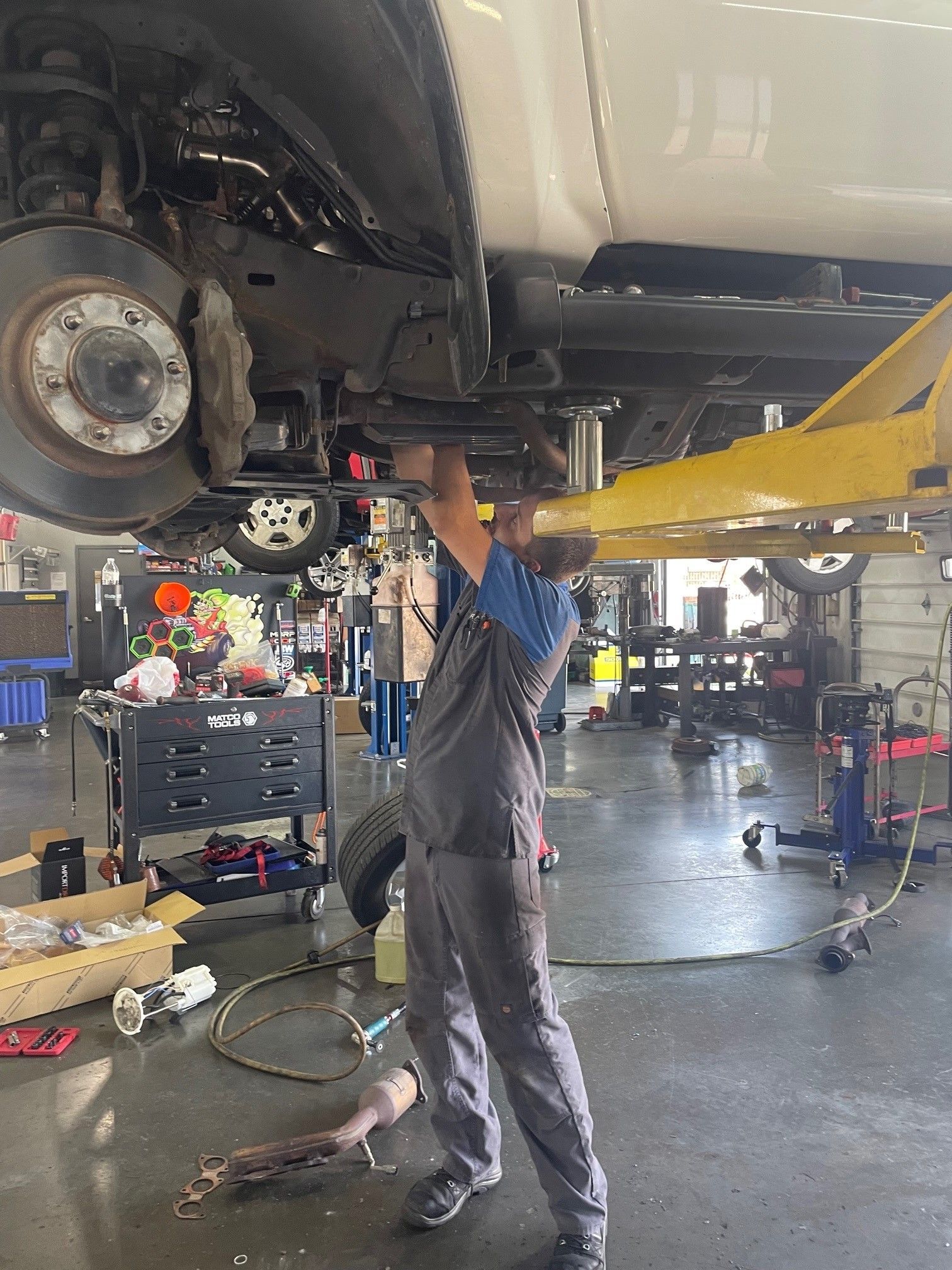
Brake service begins with removing wheels to access calipers, pads, and rotors for measurement and visual inspection. Pad thickness below three millimeters indicates replacement is due, while grooves or glazing on pad surfaces reduce friction even if thickness remains adequate. Rotors are measured with a micrometer to verify they meet minimum thickness specifications and checked for lateral runout that causes pedal pulsation. Caliper slide pins are cleaned and lubricated so calipers move freely and apply even pressure across the pad surface, preventing uneven wear that shortens pad life.
After brake repair, pedal feel becomes firm and responsive without the spongy sensation caused by air in hydraulic lines or contaminated fluid. Stopping distances shorten, vibration disappears during braking, and noise from metal-on-metal contact or loose hardware is eliminated. The vehicle tracks straight under hard braking without pulling to one side, indicating balanced braking force across both front wheels.
European vehicles often include wear sensors that trigger dashboard warnings before pad material is fully depleted, and electronic parking brakes require scan tool commands to retract calipers during pad replacement. Brake fluid replacement removes moisture that accumulates over time and lowers the boiling point, which can cause brake fade during sustained or heavy braking. The service includes bleeding air from hydraulic lines and verifying proper pedal height and travel.
Common Questions About Brake Service
Drivers in Shawnee often want to understand what brake symptoms mean and how repair decisions are made.
What causes brake rotors to warp and create vibration?
Rotors warp from uneven heat buildup during braking, often caused by sticking caliper pins that prevent calipers from releasing fully. The constant friction generates heat spots that distort the rotor surface, causing the pulsating pedal feel during braking.
How do you know whether rotors need replacement or can be resurfaced?
Rotors must meet minimum thickness specifications after resurfacing, typically stamped on the rotor hub. If current thickness is already near or below the minimum, or if deep grooves and heat cracks are present, replacement is required instead of resurfacing.
Why do brake pads wear unevenly between the inner and outer sides?
Uneven wear results from caliper slide pins that stick due to dried lubricant or corrosion, preventing the caliper from centering properly over the rotor. One pad contacts the rotor with greater force, wearing faster while the opposite pad remains thicker.
What brake fluid condition indicates replacement is needed?
Brake fluid darkens from clear or light amber to brown or black as moisture and contaminants accumulate. A moisture test strip shows when water content exceeds safe levels, lowering the boiling point and risking brake fade or internal corrosion in hydraulic components.
How does brake service differ for European vehicles compared to domestic models?
European vehicles frequently use electronic parking brakes requiring scan tool activation to retract rear calipers, and many include brake pad wear sensors integrated into the pads themselves. Replacement procedures often specify torque values for caliper bolts and specific break-in procedures after pad installation.
Mission Auto KC uses quality brake components matched to your vehicle's braking system requirements, ensuring durability and consistent stopping performance. Set up an inspection if you notice any change in brake pedal feel, stopping distance, or unusual noise during braking.