
Precision Adjustments That Extend Tire Lifespan
Wheel Alignment and Tires in Shawnee for correcting vehicle pull and preventing premature tread wear
Wheels positioned even a fraction of a degree outside specification cause tires to scrub sideways with every rotation, wearing tread unevenly and reducing fuel efficiency as rolling resistance increases. Signs of alignment problems include steering wheels that sit off-center while driving straight, vehicles that drift toward one side when hands are briefly removed from the wheel, and tire tread that wears significantly thinner on the inner or outer edge compared to the center. Mission Auto KC uses precision alignment equipment in Shawnee to measure camber, caster, and toe angles, then adjusts suspension components until all four wheels track parallel and perpendicular to the road surface.
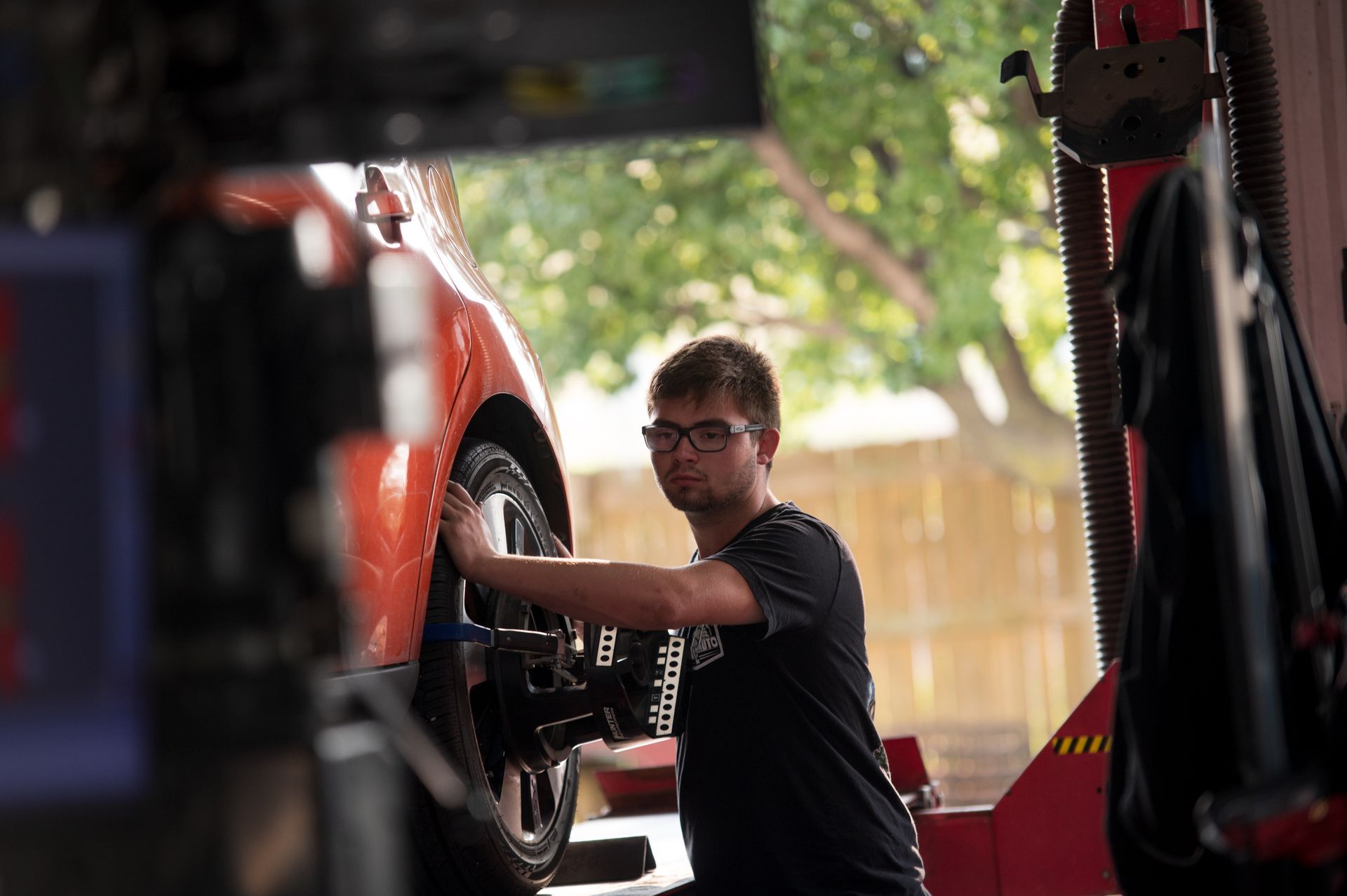
Alignment procedures involve mounting the vehicle on a rack equipped with sensors at each wheel, measuring current angles against manufacturer specifications, and making calculated adjustments to tie rods, camber bolts, or eccentric cams depending on suspension design. Tire services include mounting new tires, balancing wheels to eliminate vibration, rotating tire positions to promote even wear, and repairing punctures in the tread area when damage hasn't compromised sidewall integrity.
Arrange an alignment check and tire inspection to identify angle deviations and assess remaining tread depth across all positions.
What Changes After Alignment and Tire Service
Proper alignment positions wheels so they roll straight without fighting each other, reducing the scrubbing action that heats tires and wears tread prematurely. Balanced wheels eliminate vibrations felt through the steering wheel at highway speeds, and newly rotated tires wear evenly across front and rear positions rather than developing cupping patterns or feathered edges. These adjustments improve fuel economy by reducing rolling resistance and extend tire lifespan by distributing wear uniformly across the tread surface.
After alignment and tire work, drivers notice the steering wheel centers itself naturally when driving straight, the vehicle no longer pulls left or right on level pavement, and highway vibrations disappear when cruising at consistent speeds. Tires last thousands of miles longer when alignment keeps them rolling cleanly, and even tread wear means all four tires reach replacement point simultaneously rather than requiring early replacement of the most worn pair. Handling becomes more predictable during lane changes and cornering because all tires maintain optimal contact patches with the road.
Alignment should be checked after suspension repairs, when hitting curbs or potholes hard enough to feel impact through the steering wheel, or annually as preventative maintenance. Tire rotation every five thousand to seven thousand miles helps equalize wear between front tires that handle steering forces and rear tires that primarily support weight.
Questions Before Starting Your Project
Vehicle owners preparing for alignment or tire service often want to understand what the process involves and how it addresses specific handling or wear issues.
What causes wheels to fall out of alignment?
Impact with potholes, curbs, or road debris can shift suspension components, and normal wear in steering linkage gradually allows angles to drift outside specification over time.
How is wheel alignment measured in Shawnee?
Precision equipment uses cameras and sensors to measure camber, caster, and toe angles at each wheel, comparing current readings against manufacturer specifications and calculating required adjustments.
What tire wear patterns indicate alignment problems?
Inner or outer edge wear suggests camber misalignment, feathered tread indicates toe angle issues, and cupping patterns point to worn suspension components that need replacement before alignment will hold.
Why balance wheels when installing new tires?
Balancing adds small weights to the wheel rim to counteract heavy spots in the tire, eliminating vibrations that occur at highway speeds when mass distribution isn't uniform around the rotation axis.
How often should tire rotation happen?
Rotating tires every five thousand to seven thousand miles equalizes wear between positions, preventing front tires from wearing significantly faster than rears and maximizing total tread life across the full set.
Mission Auto KC corrects alignment angles and provides tire services that prevent premature wear and improve vehicle handling. Contact (913) 722-0016 for alignment diagnostics that identify specific angle deviations and recommendations based on current tire condition.